Showing posts with label architecture. Show all posts

Thursday, July 24, 2025

Off the Beaten Path

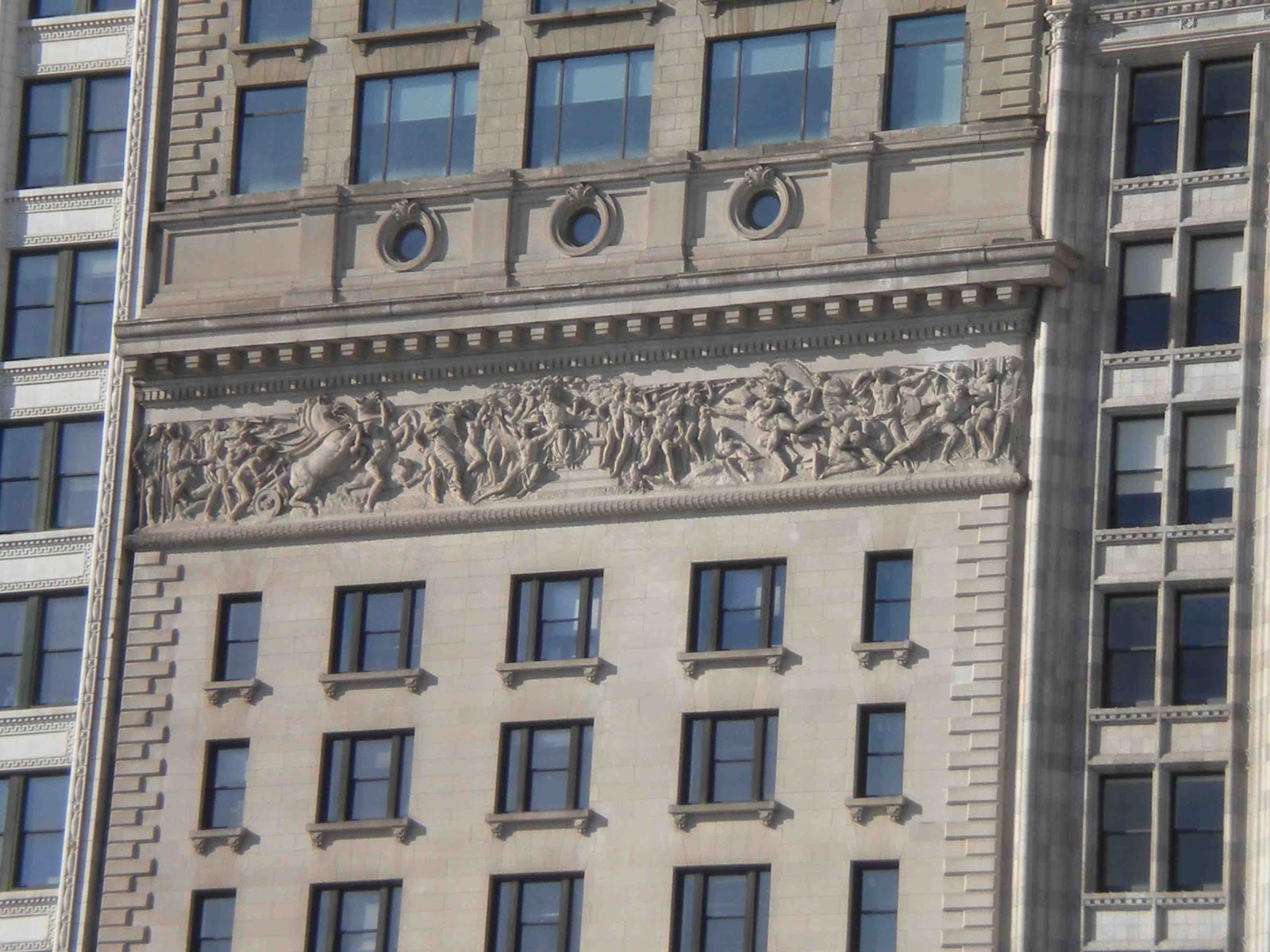
A bit of our downtown architecture, from a booklet I designed back in 2006

I did something this morning I have not done for years, if ever. I had a 9:30 appointment at my dad's bank. The bank's downtown branch is one block from Dad's apartment, and two blocks from the library, where I had a book to return and one to pick up. My plan was bank, library, and then Dad. 

The bank appointment finished much earlier than I had planned—at 9:40—and the library does not open until 10:00. Add to the picture that I was carrying a bag containing three 6-packs of Glucerna (which Dad keeps stocked in his fridge). Let's just say the bag was not light. Oh, and it was heating up (a heat dome day). 

What to do, what to do?

It made no sense to walk to the library and wait outside; the library faces east and would be in bright sunshine. Instead, I crossed the street, heavily burdened by my bag, and plopped down on a bench on the east side of the our main drag through downtown, with the buildings casting a solid shade at that hour of the morning.  

And then I just sat there. 

I watched birds fly on and off the buildings. I looked at our downtown architecture, mostly post-Civil War Italianate structures, more thoughtfully than I have in many years. Back in 2003–2004, I wrote a series of articles about our downtown architecture for the then locally owned newspaper. Some of those very buildings I had written about were next to me or across the street.  I found myself thinking of both the then and the now as I looked at changes in the local businesses over those decades, as well as the changes to the building themselves. 

And then there was just the act of sitting on a bench in the middle of downtown and not doing anything for some 20 minutes. I wasn't drinking a coffee. I was not texting or scrolling. I didn't even take any notes, because, stunningly, I didn't think I had a pen. I meant to pick one up at the bank, but picked up a bite-size Hershey bar instead. (It turned out I did have a pen, at the bottom of the heavy bag. I found it later.) 

I kept sitting. 

Eventually, the hour turned. I could hear the bells of the Catholic church a few blocks away chiming. I stood up, picked up my bag, and moved on into the rest of my morning. 

Sometimes you step off the beaten path just by sitting. And this morning was one of those times. 

Wednesday, April 17, 2019

I'll Always Have Paris

The news this week has, of course, been dominated by the fire at the Cathedral of Notre Dame in Paris.

I have never been to Paris. My only trip to Europe was 40 years ago this summer, and France was not on the itinerary. And, honestly, Paris was never high on my "I must see this" list. All the same, the day the edifice burnt, I kept the CNN camera nonstop video running in the corner of my computer screen, enlarging it from time to time to watch the building glow red and the flames reach silently upwards.

I told Warren that night that all I could think of was Samuel Dodsworth, my favorite Sinclair Lewis character, found in his novel Dodsworth. There is a wonderful scene when Dodsworth has a rare afternoon to himself in Paris (his shallow, shrill, and social climbing wife is off at a fitting and a sitting) and decides to go see Notre Dame, thinking rebelliously, "I think I'll sneak off and see if I really like it! You can't tell! I might!" So he takes a taxi to the cathedral, then crosses the river to sit in a cafe and looks at it without "Fran's quivers of appreciation." I'll let Lewis take it from there:

He admitted the cathedral's gray domination. There was strength there; strength and endurance and wisdom. The flying buttresses soared like wings. The whole cathedral expanded before his eyes; the work of human hands seemed to tower larger than the sky.

Dodsworth crosses the bridge and enters the cathedral:

[The lack of cushioned pews] made the cathedral seemed bare and a little unfriendly; but aside a vast pillar, eternal as mountains or the sea, he found a chair, tipped a verger, forgot his irritation...and lost himself in impenetrable thoughts. [He] stared at the Rose Window, but he was seeing what it meant, not what it said. He saw life as something greater and more exciting than food and a little sleep...he felt that he could adventure into this Past about him—and possibly adventure into the far more elusive Present.

At this point in my life, I will never get to Paris. I doubt I will get to Europe again, for no reason other than my traveling capacity has been circumscribed by the myeloma which co-inhabits my body and demands a seat at the table. And that's okay, for I'll aways have Paris, thanks to Samuel Dodsworth.

Saturday, November 4, 2017

Goodbye To All That

The new courthouse (photo by Delaware County) 
Our county is getting a new county courthouse for the first time since 1874. It opens officially this coming Monday, with a brief flag raising ceremony at 7:45; public open house to follow in December. (Our county Juvenile/Probate Court, which is where I work, is not moving into the new building. We are housed next door in the newish County Building.)

For the last several weeks, but especially this week, office and court staffs have been busy moving from the old to the new. Earlier in the week this was the scene behind the old courthouse:

Moving Day (photo by Delaware County) 

Stair detail in the old courthouse. Trust me, not in the new! 
I toured the new building, or much of it, earlier this week. It is all sleek lines and neutral colors: buff, sand, gray. The courtrooms feel amazingly large compared to the old ones. The view to the east and north from the corner where the glass north wall meets the glass portion of the east wall on the fifth floor is stupendous and one that I will return to, camera in hand, from time to time. But aside from taking an occasional photo, I doubt I will spend much time in the new courthouse. I don't practice anymore and I am no longer involved in Common Pleas projects, such as the felony mental health docket.

I knew that after this Friday just past, the old courthouse would be locked until it was rehabbed and repurposed. Early Friday afternoon I went over to the old courthouse, wanting one last look. The deputy at the security point told me that everything was closed. "I know," I said. I told him I was an attorney and wanted just one last look. He waved me through: "Be my guest."

I have a lot of hours and a lot of memories in that building. Before I became a lawyer, if I was in town for Election Night, I would join hundreds of others on the first floor watching the returns. The Board of Elections staff would count the ballots by hand as each precinct box came in and then post handwritten tallies on the walls. I met the attorney who would become my mentor at Election Night when he ran for City Council. My son Ben and I stayed long and late one Election Night making sure the school levy to build the new middle school, a building he would not even attend as it would open when he was in high school, passed.

Compared to colleagues of mine who practiced criminal law, I spent relatively few hours in the
THE courtroom (photo by David Hejmanowski)
courtrooms. The courtroom where I did my first (and about only) major civil trial, the old, old Probate and Juvenile courtroom, was rebuilt into a larger courtroom years ago. But the main courtroom on second floor still looks relatively the same as it did when I first came to town. My friend Judy Maxwell commented on this photo: "This is THE Courtroom that I practiced in when we first moved to Delaware in 1988. Back in those days, Henry E. Shaw, Jr. was the General Division Judge, and Thomas E. Louden was the Probate/Juvenile Division Judge."

Yes, they were. Judge Shaw was infamous for his tirades from the bench. I once saw him tell an attorney for Conrail who was lax about responding to our motion for discovery to comply immediately lest the Court shut down the entire track through Delaware County. The attorney, new to our county, made the mistake of opening his mouth to reply to Judge Shaw, which merely inflamed the matter. Used to Judge Shaw's ways by then, I made sure to keep my eyes down and on the papers in front of me. And Tom Louden, who was one of the gentlest of judges (and the worst mumbler ever when he was on the bench) is the only judge who ever had to reprimand me and opposing counsel for arguing with one another before him in a hearing. That all happened in this courthouse.

I went into the main courtroom for a few minutes. The lights were off. The pictures of previous
The view from Main Courtroom to hallway on the last day
judges were still on the walls. I did not disturb the dark nor the memories.

As I came downstairs one last time to leave the building, I ran into a good friend and colleague, David Laughlin, a DR magistrate who earlier that day had held what was probably the last evidentiary hearing ever in the old courthouse. We talked for several minutes, much of it about the courthouse, and then said goodbye with the kind of hug you give someone after a memorial service. David commented later on Facebook: "That's what I will take as memories...the great conversations with terrific attorneys such as you...that place facilitated practicing law the way it should be...with the collegiality and great relationships while helping people...the contacts and talks and stories that make such good memories."


Indeed.

As I walked back out past checkpoint, I thanked the deputy who'd waved me in an hour earlier. "No problem" he called as I walked through to the double doors to the outside, out of the past and into the now.

The old courthouse (photo by Delaware County)


Sunday, January 27, 2013

My Kind of Town

We were in Chicago briefly this weekend: a quick trip up Friday afternoon and then back home Saturday evening. Warren sits on the board of KV 265 and had an all-day board retreat to attend. I tagged along, making a beeline for the public library when the retreat started.

I had not looked forward to this trip. I am struggling with the treatment regimen for my myeloma, and all I could see was a large energy drain. As I confessed to Warren, admitting I was not eagerly anticipating a trip to Chicago was the closest thing I could think of to blasphemy. When have I ever not enjoyed, loved, and embraced Chicago?

We left behind a snow-blown Ohio and soon found ourselves on dry roads as we sliced across Indiana. Small glimpses along the road stick in my mind: the half dozen horses, Belgians by the looks of them, standing heads down, tails to the blowing snow; twenty or so deer pawing at a snow-laced field.

It has been years—decades—since I have come into Chicago at night, let alone in the winter. The Skyway loomed up in the dark, its fairy lights strung out in the dusk. We dropped down onto Stony Island, flashed past the Museum of Science and Industry, and were suddenly on Lake Shore Drive with the city opening up before us.

My heart lifted. How could it not? I spent two of my college years in this city, I made one of the most important friendships of my life here when Katrina and I were assigned to one another as roommates. That other self from that other time is also threaded through me.

It was Chicago and I was back.


We stayed in the downtown in the condo of another board member 34 floors above the city. I spent Friday evening drifting from one view through the wraparound windows to the next to watch the play of lights against the night. In the morning, I got out of bed early to watch the sun rise over an icy Lake Michigan.


I slipped away just as the retreat started and headed to the library. Down Randolph, through Millennium Park, past the Bean, down Michigan Avenue, and left on Jackson to the library.

Chicago is a wonderfully walkable city. It has great street fabric, it is full of superb architecture, and there are little details everywhere that catch the eye. Many of those details are architectural: a frieze two-thirds of the way up a facade, ornate terra cotta detailing topping a building.


Some of the details are human: the young teenage girl turning first one and then another pirouette in unselfconscious delight at the Bean, the young cellists rehearsing in the front room of the New Music School, oblivious to passersby on Michigan Avenue. There were skaters at Millennium Park, below the Bean; there were two Chicago police on bike patrol, despite the chill temperatures.


The El rumbled by in the Loop, adding to the sounds of the city.


I have a good friend, one with whom I have shared many design and architectural adventures over the years. He has often spoken with disdain for large cities. "Why would I want to go to one?" he will say, incredulous when he announces a vacation and I innocently ask, "oh, are you going to [name the city] when you're there?" My friend gives every indication that he would rather ingest shards of glass than visit a city. Other than a brief visit to Oak Park to see the work of Frank Lloyd Wright, I do not believe he has ever set foot in Chicago.

I don't try to persuade my friend or his wife (who will also raise her voice at least two octaves at the mention of a city) otherwise. But what one gives up by avoiding all cities, especially a city like Chicago! Yes, it is noisy and crowded. It can be expensive or dangerous if you are not paying attention. But it is rich in detail and exciting at every turn. Here is a medallion detail on rusticated stone, here are skaters in the heart of downtown, here is a girl turning pirouettes in the sunshine of a winter day.

Saturday, October 13, 2012

Updates

Every now and then, a post cries out to be updated. Sometimes the update comes about because of something a reader or friend pointed out, sometimes an update comes about because of the passage of time. Here are three recent posts that are just ripe for updating.

North

I raved about this play two weeks ago, having seen its final "rehearsal" before the for/word theatre company headed to New York for a one month long off Broadway run. 

Here's the great news. North is getting some amazing reviews.  


Did I call that one or what? 

If you want to read the reviews in their entirety, they are on the for/word company Facebook page. If you want an amazing theatre experience and are in New York this month, buy a ticket. Then sit back and fly.


Back in August, after a trip north to Wisconsin, I wrote about being at Yerkes Observatory after over three decades. A few readers clamored for the "story" behind the chiseled columns and I told what I knew of it and what I was able to piece together from various Yerkes sites.

This week has been a grueling one. It is Concert Week, which of course means Warren is working 100+ hours and our personal schedule has been booted aside. On top of that, I attended a two-day seminar on mentally ill juveniles in the court system. Excellent speaker (she spoke eight hours each day with the barest of outline), excellent information, absolutely and totally draining. So it was great delight that after dragging home the first day, I found an email from one Richard Dreiser, who has been giving tours at Yerkes since 1980.

Richard pointed out a factual error in my post (the observatory was dedicated in 1897, not 1896 as I had erroneously written). Factual corrections are always welcome. But what warmed my heart and has left me with a debt of gratitude to Richard was his sharing two photos from Yerkes.

The first is one of him holding a photograph of William Rainey Harper, the first president and the force behind establishing the University of Chicago as a bastion of higher education. 

Richard Dreiser and William Rainey Harper
Richard commented that he doubted the wasp ever had a face (and you will see why he feels that way in a minute) but that the chubby man below Rockefeller (whose nose you can just see at the top of the column) is almost certainly Harper minus his glasses and with an adjusted hairline. Given the satire afoot in the column, I agree with Richard.

But here is the photograph that blew me away:

Rockefeller and the Wasp
Richard believes this photograph dates to 1899, which is after the dedication and suggests that it took some time before George Ellery Hale convinced University officials (no doubt Harper) that the wasp had to go. Given the caricatures carved into the column, I might suggest that Harper had a better sense of humor than Hale. 

Ramona

I have not blogged a lot about Ramona yet. She still seems so new in the world, at least from my vantage point in Ohio, that there is a fantasy-like quality to her existence at all. Last weekend, Ohio and Oregon skyped, and seeing Ramona in her baby seat, kicking and bubbling and cooing, made her real in ways that I had not grasped before that moment. (Yes, I babbled incoherently for the first several minutes.)

Since my last post about her, Ramona has traveled a bit (Montana and New Orleans), been baptized (by her grandfather, who also married her parents two years ago), and has attended not one but two powwows. That's pretty good for a kid who is only six weeks old as of today.

Ramona and Grandpa Joe at the baptism

As I noted above, it's Concert Week. More to the point, the Symphony opens its season tonight. Tonight. I feel the clock ticking and it is time to turn away from writing and turn instead to the rest of the day. More Ramona photos and stories will follow in the months to come. For now, I will leave you with this image of Ramona at her second powwow, this one in Helena, Montana. Note what she has on: her fancy dance shawl! 

With Aunt Jenna at the Montana powwow


Monday, August 13, 2012

The Wasp and The Nose


Both Darla and Linda wanted to know about the wasp that was chiseled off of John D. Rockefeller's nose.

As I recently wrote, the columns flanking the front and rear entrances to Yerkes Observatory are ornately carved with repeating motifs. One such motif is a caricature of John D. Rockefeller, whose substantial donations allowed William Rainey Harper to establish the University of Chicago as a world-class institution right from the start. When the University opened in October, 1892, five of the campus's main buildings were already standing, with another five to follow in 1893. The architect, Henry Ives Cobb,would turn his attention to the observatory in Wisconsin shortly.

The observatory and the main Chicago campus are designed in entirely different architectural styles. The campus is hidden behind looming Gothic buildings that shield the intellectual community from the outside world. In sharp contrast, the observatory is set on a sweeping, open lawn. Cobb adorned both sites with ornate carvings and gargoyles. And herein lies the tale of the wasp and the nose.

Yerkes Observatory was dedicated in 1897, five years after the University of Chicago opened its doors. When unveiled, the columns contained the caricature of Rockefeller, sporting a vastly exaggerated nose, with a large wasp poised on the end. The wasp's face was supposedly a caricature of William Rainey Harper. I say supposedly because I have never seen a photograph of the original carvings. I have read that the wasp was Harper, I have heard that the wasp was a trustee. Regardless of who the wasp was, the nose was carved out of proportion, indicated Rockefeller had been stung severely.

The official version of the defacement is that George Ellery Hale, the first astronomer of Yerkes and the Chicago faculty, found the caricature of Rockefeller and the wasp inappropriate and embarrassing. The word "grotesque" pops up in more than one commentary on the carvings. It was certainly not something Hale wanted on his world class observatory.

Hale ordered the wasps chiseled off. I heard he wanted Rockefeller removed as well, but others convinced Hale that removing the entire offending carving would mar the columns and draw attention to the issue.

It has been suggested that the wasp was "stinging" Rockefeller for more money for the University, which would lead me to believe that it was Harper's face on the wasp. Stories of the relationship between Rockefeller and Harper, built upon the tension between Harper's vision of a world class institution and Rockefeller's reluctance to part with the millions necessary to create it, still reverberate around the Gothic quads at Chicago. 

Hale had his way: the wasps came off. The stories remain. As do the chisel marks.

Friday, August 10, 2012

Of Dawgs and Domes


Warren and I got out of town for a few days a few weeks ago, spending most of the time in Madison, Wisconsin, with family.We were long overdue for a few days away not related to the Symphony and this was our best opportunity.

You can't get to Madison without going through Chicago. Well, maybe you can, but we can't. Especially when we were on the trail of a hot dog. Not just any hot dog, mind you, but a Superdawg.


You know it is a Superdawg because of the statues on the top of the drive-in.

Warren and I are hot dog aficionados and have been known to plan our travel just to make sure certain hot dog stands are part of the route. Superdawg, long on our list, was why we chose the path we did in heading to Wisconsin. Other routes would have been more direct and a lot more efficient, but they would not included Superdawg.

Yes, that is traditional Chicago "green relish" on the Superdawg. 
We were not disappointed. In fact, I can easily say that the Superdawg is the best hotdog I have ever eaten (and I have eaten a lot of hotdogs in my life). In fact, Superdawgs are so good that they are permanently on my "gotta eat this when I am Chicago" list, right alongside Harold's Chicken.

Although I probably could have stayed and eaten at Superdawg for the remainder of the weekend, we were headed to Wisconsin. Warren and I continued north under the delusion that the roads leading to Wisconsin would not be clogged on a bright, sunny Saturday and that Lake Geneva, a resort town in Wisconsin, would somehow be anything other than bumper-to-bumper crawling traffic on a bright, sunny Saturday.

Let's just say our delusions were soon smashed.Warren had memories of being at Lake Geneva as a child, and I think harbored some faint hope that he might even be able to find the vacation house his grandmother had rented that long ago summer. We quickly realized that the only sensible response to Geneva Lake was to get out of it as soon as possible, and the fastest way to do that was to turn along the lake (cleverly named Geneva Lake) and head towards Williams Bay, with the thought of picking up a blue highway leading to Madison from there.

As we drove towards Williams Bay, I reminded Warren that it was the home of Yerkes Observatory, the University of Chicago's architectural and astronomical gem. Warren said in response, "there it is."

And he was right. There was the main dome of the Yerkes Observatory, looming up over trees on the horizon.

We debated whether to stop. Warren had never seen the building (we were too late for any tours that day); I had not seen it in over 35 years. I thought it was out of our way and we should keep driving. Warren thought otherwise. "How many times are we ever going to be this close to it again?"

He was right.

We flashed through Williams Bay, coming upon the observatory quickly. I had forgotten it was set so close to town and the road, but had not forgotten the long, sweeping drive leading up to it.


And then there it was.

A long time ago, in a galaxy far, far away... Or something like that. A very, very long time ago, in my first year of college, I was in an ill-advised (and blessedly, in retrospect, ill-fated) relationship with someone pursuing a PhD in astronomy. The sole good thing that came out of this was I spent more than one weekend at Yerkes Observatory and got to know it in a way that only graduate students in astronomy would.

And here I was, almost 40 years later, seeing it again.

Warren had to attend to some urgent Symphony business by phone, so I was on my own to wander around the grounds. For the longest time, I just stood there and let it sink in. I stared up at the main dome, the one that houses the 40 inch refracting telescope through which I once looked at a double star in a far away galaxy. I looked at the shutters on the dome and distantly recalled the sound of them opening.


I admired the building, seeing it architecturally in ways I did not know so many years ago. Yerkes Observatory remains one of the great architectural accomplishments of Henry Ives Cobb, who was the principal architect for the University of Chicago. While the campus is a collection of Gothic Revival architecture, Cobb designed Yerkes in a classical mode with strong Romanesque features.


Roman arches march around the domes, frame the long sweeps of windows, and mark the identical front and rear entrances.


In keeping with the gargoyles and other grotesqueries with which Cobb marked the Chicago campus, Yerkes is also adorned with strong, ornate carvings. They run up the columns,


they adorn windows,


and they are tucked under, above or around the various portals.


As I looked at the carvings, I sought out the most famous of them: the portrayal of John D. Rockefeller, the founding benefactor of the University of Chicago, whom Cobb had caricatured in a repeating motif at Yerkes. Originally there was also a large wasp with the face of William Rainey Harper, the founding president of the University, perched on the end of John D.'s nose, but the wasps were ordered chiseled off when the building was opened. The chisel marks still remain.


Many years ago, I had written a poetic monologue featuring George Ellery Hale, the great astronomer who founded Yerkes Observatory and, later, the Mount Wilson and Palomar Observatories. (He is the "Hale" of the Hale Telescope at Palomar Observatory.) The poem did not survive the Great Poetry Massacre of the late 90s, but as is the case with a number of those never to be read works, pieces of it have remained in my mind. In the poem, Hale talked of going west in part because the Wisconsin nights were often too misty for astronomers to get good work done. The skies of California were crisp and dry, and presented no such problems. Hale, already an established, highly respected scientist when he made the move, became even more prominent in his field after he left Yerkes. I have never read that he regretted leaving behind Yerkes. But my poem ended with him musing about what he had left behind, "back in [his] youth," his little observatory, his "little Yerkes."

While I felt the faint whiff of the past—my past, the observatory's past—when standing there once again, I felt more the strong pull of the present. The day was growing later and family was waiting. Warren finished his phone calls and I quickly pointed out a few features, including the Rockefeller carvings. I marveled aloud that I was sharing Yerkes with him. We gave each other a hug, then climbed into the car, drove out of the grounds and on down the road.

Thursday, June 7, 2012

The Rest of Chicago


There was more to Chicago than the Alumni awards last weekend. How could there not be? Chicago is the city of my youth and it has never left my heart.

I first set foot in Chicago in September, 1974, as a freshman at the University. It is my singular good luck that I first saw the University of Chicago, in all its Gothic splendor, and met Katrina on the same day. They are forever melded in my mind. Even though she and I have traveled far from Hyde Park (the University's neighborhood) and the gauche eighteen year olds we were, I never see the campus without thinking of Katrina.

Which is why it was perfect that Katrina was in Hyde Park herself last weekend. As a member of the Alumni Board of Governors, she chaired the awards committee. (Truth be told, I knew months ago that Muriel was receiving the award.) Katrina had duties and obligations on Saturday, and Warren and I had a meeting with Muriel, but Katrina and I nonetheless found time for a meeting, a hug, and a walk across campus talking furiously the whole time.


The campus was beautiful and all three of us commented on that beauty as we walked. It holds memories―memories of Katrina and me dancing and singing our way across the quad ("The minute you walked in the room, I could tell you were a man of distinction, a real big spender. Hey, big spender, spend a little time with me..."), memories of exiting Cobb Hall after a movie into a misty spring night and being overwhelmed by thoughts of Warren (he will know why when he reads this post), memories of walking across the Midway on a silent, cold winter night and seeing the full moon rise up, terrible and large, and hang over the IC tracks at the far end of the Plaisance.

We met up with Katrina's husband, Ed, near Harper Tower, and Warren and I gave Ed and Katrina a ride to their downtown hotel. The talk never ended. It was too fast, I wanted more, and I was thrilled to see Katrina at all. There were more hugs on Michigan Avenue as they got out of the car; Warren, watching the traffic in the rearview mirror, said tersely, "get back in the car now!"

Warren and I spent the night in Oak Park, where a century plus ago a young architect by the name of Frank Lloyd Wright began to turn architecture upside down. As a freshman, I had lived across the street from the Robie House, one of Wright's masterpieces. The predecessor (and to me the handsomer house) is in Oak Park:


So is what is undoubtedly my favorite structure in all of Chicago, if not the world:


It is a ticket booth—an original!—from the 1892 Columbian Exposition. I find it simply incredible that someone has an original ticket booth in their side yard.

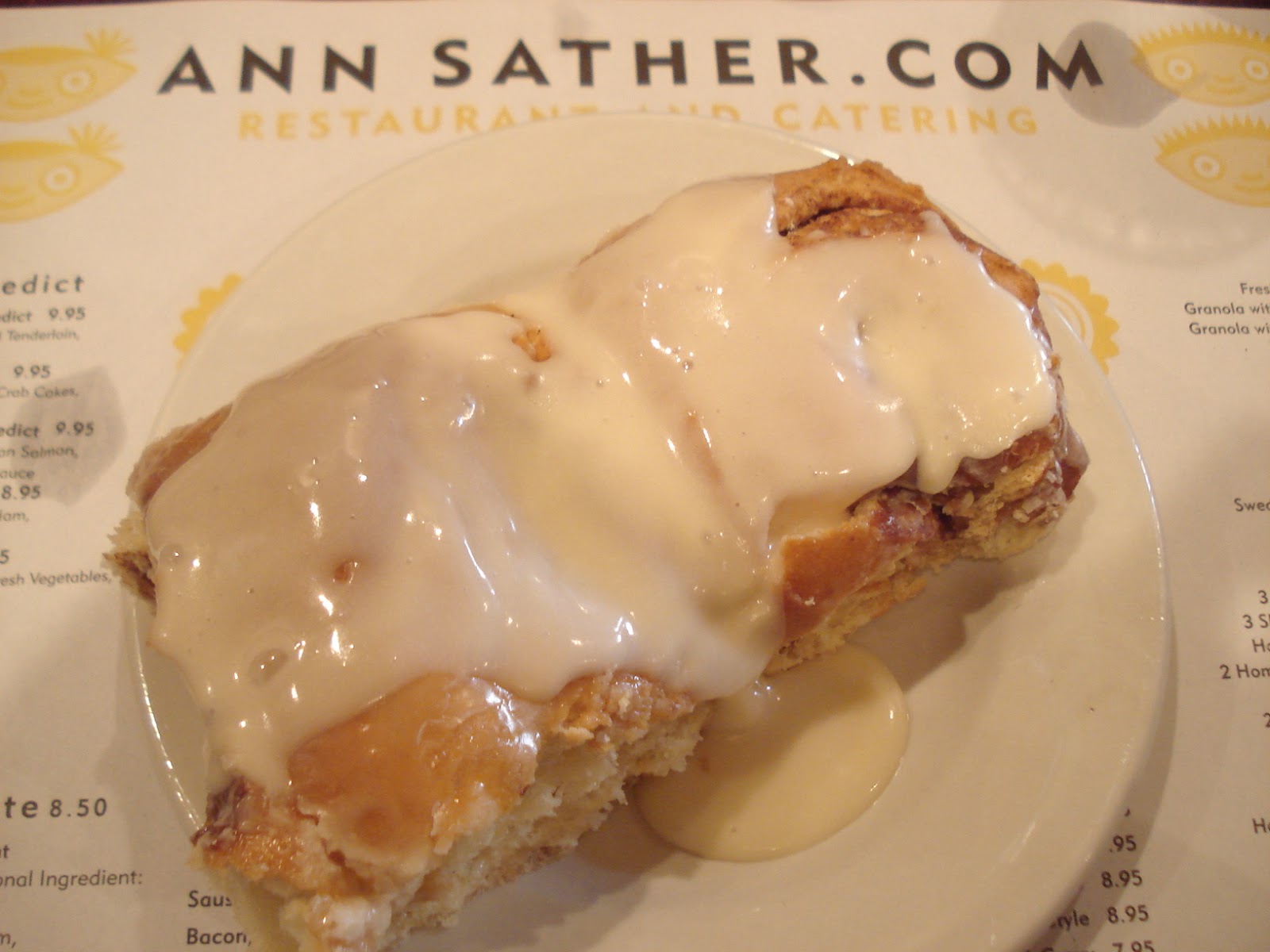
Sunday morning before leaving for Ohio we drove back into the city, to meet another friend for breakfast. John is the same age as my son Ben, and is one of "my kids" from when I used to coach Destination Imagination. He now lives and teaches in Chicago and we were meeting at Ann Sather's.

Well, that was the plan. And a good plan it was, too, except for the fact that John got assaulted after parking his car and before entering the restaurant and it was some 30 or 40 minutes before he could rush into the restaurant, disheveled and wild-eyed, announce he had been assaulted and was filing a police report, and run back out.

I was so distraught that I had to order a second serving of what are surely the most amazing cinnamon rolls in the world:

From the blog Lucky Taste Buds! 
We never met up with John. We had to head home long before he completed the reports, so we left him our good wishes and a gift certificate for the breakfast he never got. There will be other trips to Chicago and other times to sit with John and enjoy breakfast.

The drive from here to Chicago or Chicago to here is a bit under six hours. We took a little longer coming home on Sunday. We meandered deliberately to a small cemetery in a small Indiana town which my great-great-great grandfather helped settle in the 1830s. Henry is buried there and we found his grave fairly quickly.


And we meandered again to drive a portion of the Lincoln Highway, the original US 30.

In recent years, most of US 30 in Ohio has been "improved" into a four-lane freeway and routed around the small towns and cities it once fed. I understand the reasoning behind that: the "new" US 30 is able to carry far more traffic, especially semis, swiftly and more directly than the original roadway. The small towns are no longer congested with diesel fumes and rumbling trucks.

But, oh, what we gave up when that improvement occurred.

We drove the portion of the Lincoln Highway that went into Van Wert, on the western side of Ohio. We came into town through an old residential section, slowing our pace down to match the narrow street. We rolled through a portion of the downtown, much of it shuttered, we drove past the courthouse.

We were driving on what William Least Heat Moon called (and immortalized in a book by the same name) "blue highways." On a blue highway, you will find the local doughnut shop. On a blue highway, you will find the hand lettered sign, "Fresh Eggs," at the edge of a farmhouse. On a blue highway, you will see the small stores and not just the strip malls.

On a blue highway, you will find a piece of this country's, and perhaps your own, past.

My life is threaded with blue highways and they are my preferred routes for travel. Back in my student days, I would sometimes take the Greyhound bus from Chicago to Delaware and back again. The bus in those days only traveled the blue highways. I knew the look and feel of downtown Fort Wayne, of Van Wert, of Delphos and Lima and Kenton.

Driving on the Lincoln Highway decades later, after a weekend in Chicago in my old haunts, I felt the faint touch of the past, light as moth wings, whisper against my face. I raised my hand as if to brush the memories away, drove on through town, and onto US 30.

Thursday, February 4, 2010

Gargoyles, Gershwin, and the Guggenheim

What do gargoyles, George Gershwin, and the Guggenheim all have in common? They are all pilgrimages we made when we were in New York last weekend.

Before we left last Friday, the most frequent bit of advice was that we "should see a show." Wicked, The Lion King, something. Sometimes it came in the form of a question. "Are you seeing any shows?" "What shows are you going to see?"

What shows? New York is a show unto itself. We couldn't squeeze in a show because we were too busy exploring places near and dear to our heart.

Warren and I share many things in common, one of the multiple reasons we are so compatible. Among those mutual interests are architecture, cemeteries, George Gershwin, Frank Lloyd Wright, and exploring new places in search of our other interests.

A trip to New York for us is a match made in heaven.

Because of our schedules, Warren and I had all day Saturday as well as Sunday morning before going our separate ways.

The first stop Saturday was easy to pick. We headed for the Guggenheim, the last major structure designed by Frank Lloyd Wright.

The Solomon R. Guggenheim Museum sits at 86th and Park Avenue. From Grand Central Station, you catch the Number 6 subway uptown and walk west towards Central Park.

Warren saw it first, wedged into the block. "There it is!"

My first comment was "it looks so much bigger in the photos." From a block away, it looks improbably small. But that is the beauty of Wright's design, tricking the viewer into imagining it to be a small building tucked into the urban streetscape.

Wright designed most of his buildings on his theory of compress and release. You often enter a Wright structure through a small, low entrance (compress) that then opens into a wide space (release). The Guggenheim is no exception. First comes a small, tight entry with a low ceiling, then you walk into that beautiful open space of the ascending spiral.

We both gasped.

It is amazing space. The art is wonderful too, hung in galleries adjoining the spiraled space, but it was the spiral atrium that kept calling to me.

Compress and release, compress and release.

When we came out some two hours later, we were still not sated. We stood outside and took pictures, marveling and commenting. It still looked small to me, nestled into the neighborhood, but I knew better now.

We then debated where to go next.

Further uptown and farther to the west was a building I have wanted to see ever since reading about it in Christopher Gray's Streetscapes column over a year ago. It is only an apartment building, but stands out in Manhattan for the unusual gargoyles decorating the structure.

I started college at the University of Chicago, a campus full of Gothic architecture on which gargoyles abound. Chicago gargoyles are not happy gargoyles. If you find one with a smile on its face, it is probably because it has just watched another undergraduate bite the intellectual dust.

Not so the gargoyles I was searching for in Manhattan. These gargoyles are happy gargoyles, wearing ridiculous expressions. One is known as the Gobbling Gargoyle, because he is lustily consuming a meal with a large spoon raised halfway to his mouth.

So I asked Warren if he would be willing to take the Number 6 further uptown and then look for the gargoyle building. Of course he would be willing.

We disembarked the Number 6 at 110th and Lexington. That's East 110th. The gargoyles were at 527 West 110th.

"Oh, let's walk." (That was my suggestion.)

So we did. Two miles. It was 18 degrees out, before you factored in the wind chill.

The wind was blowing. Hard.

Have I ever mentioned how wonderful a husband Warren is? He was cold, it was freezing, we were hungry, but he didn't complain once. Not one word. Not one criticism of our slogging up 110th into the face of the wind just to see a building. Not one pointed comment about how after finding it, my hands were too cold to hold a camera after a few moments.

Instead, this amazing man I am married to steered me to a nearby Chipotle where we ate lunch and grew warm. From there, we took a subway down to where the World Trade Center used to stand. By then, with evening coming on, it had grown even more bitter and we quickly decided to beat a hasty retreat to our friends' home where we were staying.

The next morning, we joined our hosts, Ed and Katrina, for breakfast. Katrina and I have been close friends since 1974. She had been out of town until late Saturday night and this was the first we'd all had a chance to sit down together.

Before we came to New York this time, Warren discovered that George Gershwin, who died of a brain tumor at the age of 38, is buried in Westchester Hills Cemetery in Hastings-on-Hudson, less than ten miles from Katrina and Ed's front door. Over waffles, I asked if they would be up for a jaunt in search of George Gershwin. Sure, why not?

Off we went.

It is amazingly easy to find George Gershwin. He and other members of the Gershwin family, including his brother Ira, are in a large mausoleum right past the office as you pull into the cemetery. We piled out of the car and walked up to the doors to peer inside.

There is a Jewish custom of placing a small rock on a grave marker you are visiting. Some say is a way to let the world know, "Someone was here. This person is not forgotten." The Gershwin mausoleum had a few rocks on the top step and I regretted that I didn't think to bring a rock from Ohio to leave as well.

After the cemetery visit, Warren and I had separate schedules for the remainder of our trip. I spent more time in the City and visited with friends while he attended his meetings. My memories include being in Little Italy Sunday night with Bethany and hearing Italian spoken all around us, taking a Lower East Side walking tour with Katrina on Monday, eating pastrami sandwiches at Katz's Deli (think "When Harry Met Sally") and our deciding to walk to Grand Central Station from there (about 3 miles). I spent my time with my girlfriends; Warren spent his time immersed in the world of symphony management. Our final night, Katrina, Ed, Warren and I shared a meal rich in flavor and friendship, full of warmth and talk and laughter and cream puffs.

Warren once wrote that if I chose to cast my lot with him, "you probably aren't going to get Europe, diamonds, many expensive meals or lots of shoes." That statement, meant to be a commentary on his modest income (and also an inside joke), has become a touchstone of our relationship. The morning after we got back home, I emailed him as I do each workday: You may not give me Europe or diamonds, but you give me the world, starting with your love.

So that's why we didn't take in a Broadway show. Because all the show we wanted, all the world we needed, was already right there in our own hands.


Friday, August 28, 2009

Curveballs and Zucchini Bread

I spent all day Thursday at a grant writing seminar at the Ohio Judicial Center, home of the Ohio Supreme Court. The Center is an Art Deco masterpiece originally built in the early 1930s for the Department of Labor. Used heavily by Labor and other departments, the building was finally decommissioned and sat crumbling and decaying, slated to be razed, until Chief Justice Moyers had the foresight to say "this will be the Court's new home."

After a magnificent and award-winning restoration, the Judicial Center is the crown jewel of Ohio's, if not the nation's, public buildings.

It had been a raggedy week. Because of a programmatic and ideological problem at my job, I arrived at the end of each day utterly drained. Wednesday was particularly bad with the phone ringing all afternoon while I was trying to make a lemon tart for my mom's birthday the next day. I was so rattled by the barrage of calls that at the point I was straining the seeds out of the lemon juice, I started to pour the juice down the drain rather than into the bowl.

I yelped, albeit to an empty kitchen, and corrected my pour immediately. I had enough lemons left over to make up for the lost juice, and held my breath and my focus until the tart slid safely into the oven.

By the time Thursday rolled around, I was tired and sad and numb from the fallout. The thought of spending a day in a seminar, when all I wanted to do was nothing, did not thrill me.

All the same, my spirits lifted when I walked up to the Judicial Center. Magnificent architecture will do that for me.

Life throws curveballs, be it a baking mishap or something more substantial. I used to be much better at hitting them. This week I just happened to be in the batter's box with no one up to bat after me. My tolerance for fast pitching is a lot less than it used to be and there was no umpire to call the count.

Full count? I'll say.

Lost in the shuffle was having time: to write, to reflect, to catch up. The zucchini, tomatoes, and peppers we picked last weekend have sat in heaps on the kitchen table and floor all week. There has been no time and less energy to turn my attention to them.

And lost in the shuffle was the sweetness of my daily life. The rhythm was all off. Warren patiently waited while handling his own daily adventures. I couldn't listen to him when the phone was ringing. I was edgy and paced a lot. While Warren knew he was not the source of the week's discord, it rolled into every corner of our home.

Last night, renewed by eight hours in Art Deco heaven, I found some reserves I wasn't sure were still there. I sat through dinner and easily talked and shared the day with Warren. Afterwards, I started in on the zucchini, cutting and bagging. 12 quarts of slices and two loaves of bread later, all the zucchini was done except for a small one for cooking tonight. Warren joined me later and together we cleaned and cut peppers. There are still tomatoes to process and tonight we will make sweet pepper/onion relish, but the piles are finally disappearing.

And I'm out of the batter's box.

There is more to write, especially since I have photos of Food-A-Thon III. In the meantime, because Christine asked for it, here is the zucchini bread recipe I always use. I've been making this recipe for years and have made so much this summer I don't even need to look at it while I bake!

Zucchini Bread
Recipe from
Amish and Mennonite Kitchens, by Phyllis Pellman Good and Rachel Thomas Pellman

Makes 2 loaves

3 eggs
2 cups sugar (Note: Amish baking tends to be heavy on sugar)
2 cups zucchini, shredded (Note: I find that you can go over this amount - 2 HEAPING cups - without ruining the recipe)
1 cup cooking oil
2 tsp vanilla
3 cups flour
1 tsp salt
1 tsp baking soda
1 tsp baking powder
2 tsp cinnamon (Note: I use heaping teaspoons)
½ tsp nutmeg
¼ tsp cloves
(Note: I also usually add ¼ tsp ginger)
½ cup raisins (optional)
I also usually add ½ cup crushed pineapple, drained, even though the recipe does not call for it.

1. Beat eggs until foamy. Stir in sugar, oil, zucchini, and vanilla. Note: I use a beater for the eggs, then do everything else by hand with a wooden spoon.
2. Gradually add dry ingredients, including spices. Note: I have found that just dumping all the dry ingredients in on top of the first mixture and stirring well (with that wooden spoon!) does not affect the quality or consistency.
3. Stir in raisins and pineapple if you are using them.
4. Pour into bread (loaf) pans, which have been greased on the bottoms. Bake at 325º for 60-85 minutes. Test with a knife blade - when it comes out moist but not with batter on it, it's done! The recipes says cool 10 minutes and remove from pans, but I find that I remove it that quickly, the bread often pulls apart on the bottom. I have left it overnight in the pan and had no trouble removing it the next morning.
Note: this bread has a good shelf life if kept in the fridge. It also freezes well. It is excellent with cream cheese frosting. If you want muffins, the above recipes makes 24+ muffins or a tin of 12 and a separate loaf.

Tuesday, June 9, 2009

Chicago

Wednesday morning we are getting up very, very early and driving to Chicago, where Warren will spend the rest of the week attending the national conference of the League of American Orchestras and I will spend the rest of the week enjoying Chicago.

"Enjoying Chicago" means I am in for lots and lots of walking, as the number one thing I love to do in Chicago is look at the architecture. And there is no better city in the world than Chicago in which to look at architecture.

On Friday, I am being joined by Lindsay, who is the same age as my older son (23) and who I have known since she was five. Lindsay also loves architecture.

Both of us are fascinated with the Columbian Exposition of 1893, which was the first true world's fair and which took place in Jackson Park on the south side of Chicago. The Columbian Exposition featured the White City, a fanciful collection of Beaux Arts buildings that ringed the Grand Basin. With the exception of the Fine Arts building, which was built of brick to protect the works within, the buildings were built of staff, a plaster and straw mix, overlaid onto metal frames. They were only temporary.

After the Exposition closed, most of the buildings either burned down and were razed. The Fine Arts Building quietly rotted for a number of years before being restored and transformed into the Museum of Science and Industry, which has just celebrated its 75th anniversary. Other than that and the Midway, there are only traces of the Exposition left. Some of what we plan for Friday is looking for those traces.

I first saw Chicago when I was 18½. I had been admitted to the University of Chicago, which was built of the north edge of the Midway, and my parents drove me to college. I had never seen the campus, only studied the college brochures and catalogues. (This was long before internet, websites, and virtual tours.) I navigated my father off the Dan Ryan, down Garfield to Cottage Grove, then south on Cottage Grove until we turned onto the Midway and I first saw that magnificent wall of Gothic architecture.

Although I didn't realize it back then, Warren has a lot of Chicago roots. His mother was born and raised in Evanston, and until Warren was well into high school, his grandmother lived in the greater Chicago area. As a result, he and his siblings made frequent trips to Chicago. When Warren was 20, he spent the summer in La Grange, working at the Musser plant. He was leaving Chicago and returning to Delaware to start his junior year at Ohio State just as I was arriving on the Midway. In looking back, I figured we missed each other by one week.

Warren and I talk about everything, but one discussion we tend not to visit is "what if?" We chose other paths back then. Life happened. We'd both rather celebrate we have now than wring our hands over what never was.

We do a great job of celebrating the here and the now.

In the past, I had always felt as if pieces of me were scattered all over the country and I could never quite gather them all up. That sense of being scattered was something I'd carried with me from childhood, for lots of reasons. There were times, more than there should have been, when I felt my life was built of staff - an impermanent façade much like the 1893 Exposition buildings.

It took me awhile to figure it out, but it turns out I wasn't made of staff after all. I was made of something more resilient and lasting. Thanks to a great therapist, great friends, a not so great illness that taught me great things, and the incomparable love of Warren, I have been restored, not unlike the transformation of the wreck of the Fine Arts building.

The beauty of my life now is that all of the pieces are gathered. I am no longer torn between here and somewhere or something else. I am finally home, literally and figuratively.

Friday Lindsay and I will be looking for the remains of an amazing event, the first world's fair ever. We will look at the outside of the Museum of Science and Industry and compare it to the photos from the fair to see the phoenix that rose from the ashes of the Columbian Exposition.

I know just how it feels.

Tuesday, March 24, 2009

Community I

As a child growing up in the then small town of Delaware, Ohio, I would often stand on the downtown sidewalks and stare up at the buildings, wondering what used to be in the clearly vacant upper floors. As an adult, I was lucky enough to be able to write about my hometown’s commercial architecture for the local newspaper. Writing those articles, which ran for almost two years, gave me the opportunity to get into, under, through, and on top of many of Delaware’s downtown buildings and satisfy that long-held fascination with the buildings.

Delaware is gifted in that it has a fairly intact downtown commercial district. Much of the existing building stock is original to the nineteenth century and, except for changes to the storefronts of the buildings, reasonably intact. The predominant style is Italianate, an architectural style that was most popular in this country in the decades preceding and following the Civil War.

In looking around downtown Delaware, we are reminded constantly of our past. The buildings that line our downtown streets are familiar to us, so familiar that we often walk past them without seeing them. We notice them instead by their absence, as with the gap on West Winter Street where Bun’s stood before the fire. Our downtown buildings are so familiar that they appear in our dreams and shape our expectations of what a “real” downtown looks like. When we travel to other communities, we feel most at home, without even recognizing it, in those whose downtown buildings and facades resemble our own. We know our Delaware streetscape well even if we don’t always acknowledge it.

What I find equally fascinating is the role of a downtown in a community. Winston Churchill said “We shape our buildings and afterwards our buildings shape us.” In doing so, mere space becomes place and through a sense of place, a community comes together and thrives.

Our City Manager recently said that “there is a heart to this community and the downtown is that heart.” That was as true a century ago as it is today. We still look to our downtown as the core of this community. We no longer have the Pumpkin Show; now the Delaware Arts Festival fills our streets in mid-May. The downtown fountains are gone, but we have wonderful tile mosaics popping up on the sides and backs of buildings. The summer band concerts on the courthouse lawn ended when the summer band program did; the local symphony performs a free Fourth of July concert that attracts thousands from all over the region. The downtown Farmers Market turns our downtown into our family kitchen twice a week from May until October. Although we have changed in so many ways in one hundred years, our downtown and its role in our community has remained largely intact. The downtown is our heritage from past generations and also our legacy to future ones. Our community is richer because of it. Like having a local symphony, a local college, and a local Farmers Market, we are richer because of our streetscape.

Visitors to Delaware often exclaim over our downtown streetscape. It is charming; it is visually appealing. In Delaware, the past is our present. We have retained our old buildings, not as museum pieces, but as our identity. Unlike other communities that didn’t realize the important of place to a community, Delaware did. One only has to travel to a community that razed its downtown in the middle of the twentieth century to realize what a treasure we have in our midst.

If you own real pearls, I was told you are supposed to put them on hours before whatever event you plan to wear them to. Apparently pearls pick up the warmth and oils from your skin and are more lustrous as a result.

Our downtown is not unlike a string of pearls. We have worn it daily, sometimes casually, sometimes carelessly, for over a hundred years. Like those pearls, our downtown has taken on the warmth and the glow of that daily use. May we continue to wear it proudly.