Wednesday, November 11, 2009

Doughboy

When I was growing up, there were two sepia photographs of soldiers in my grandmother's bookcase. One was a photograph of her husband, my grandfather. The other was a photograph of a wistful looking young man who was always referred to as "Uncle Art."

Uncle Art was my grandfather's younger brother. Both were in the army during World War I.

My grandfather was mustered out quickly as he was blind in one eye from a carpentry accident. Uncle Art, however, served from 1917 until 1918, when he was killed in France.

The family story was that Uncle Art "got his head blown off" in battle. He was buried in a small country cemetery a little ways outside of town here, next to his parents.

Growing up, that was about all I ever knew about Uncle Art. Neither of my grandparents ever mentioned him.

Even without his being mentioned, it always seemed to me that World War I had a profound impact on my grandmother. Although all four of her sons served in World War II, World War I seemed the more immediate and more personal war in the household. There were the photos of the young soldiers, of course. And in the living room was a framed copy of the quintessential poem of that war, McCrae's "In Flanders Field:"

In Flanders Fields the poppies blow
Between the crosses row on row,
That mark our place; and in the sky
The larks, still bravely singing, fly
Scarce heard amid the guns below.

We are the Dead. Short days ago
We lived, felt dawn, saw sunset glow,
Loved and were loved, and now we lie
In Flanders fields.

Take up our quarrel with the foe:
To you from failing hands we throw
The torch; be yours to hold it high.
If ye break faith with us who die
We shall not sleep, though poppies grow
In Flanders fields.

My grandmother would often recite that poem, especially on November 11th. It was one of the earliest poems I committed to memory as a result. To the end of her days, she always referred to November 11 as "Armistice Day," and made sure the flag flew from sunrise to sundown. Sometimes she would intone "on the eleventh hour of the eleventh day of the eleventh month" in referring to the significance of the day.

In recent years, I did a little bit of research and discovered a little bit more about Uncle Art. He entered the Army in 1917, a member of Company K, 166th Infantry, which was a part of the 42nd Division, known as the Rainbow Division. In all likelihood Uncle Art trained at Camp Mills, located on Long Island.

After training, Uncle Art shipped to France. I don't know whether he came back to Delaware before shipping out or went straight on by troopship to Europe. He made the rank of corporal.

The 42nd Division saw a great deal of action during World War I. Its first engagement was the Champagne-Marne offensive, which was the last great thrust of the German Army. The Germans were unsuccessful, in large part due to the influx of American troops to bolster the French army.

2058 soldiers of the 42nd Division died in that battle, which only lasted three days. Uncle Art fell on July 15, 1918, the first day of the engagement. There was a small death announcement in the local newspaper.

Uncle Art was buried in France initially. His body did not come home until three years later, when a number of bodies of American soldiers were exhumed and returned by ship to the United States for reburial.

Uncle Art came home on the SS Cantigny. The Cantigny, a troopship that wasn't built until after the end of World War I, primarily saw duty repatriating the doughboys after the war ended. After transporting the ones who survived, the Cantigny apparently repatriated those who did not. Its active military use ended in September, 1921, which was the same month that Uncle Art returned. He may have been on the last military voyage of that ship.

Uncle Art was buried in a small country cemetery about two miles outside of town. Looking at the little cemetery, I cannot fathom why his father picked a cemetery that at time would have been a fair drive from town. It was not a "new" cemetery even then, and my grandparents had no affiliation with the little church that operated it.

I went out there two days ago to visit the graves. There is Uncle Art alongside his mother and father. My grandfather, who was his brother, and my grandmother are close by. It is a quiet, mossy cemetery, ankle deep in leaves in the fall.

The War to End All Wars ended 91 year ago today on the "eleventh hour of the eleventh day of the eleventh month." Uncle Art came home three years later. Alice, my great-grandmother, died a year after that. I have wondered whether her son's homecoming was the strain that killed her or the relief that released her?

No one is left to answer that question. No one is left who knew my great-grandmother. No one is left who can tell what her reaction was when her doughboy came home from France at long last.

Tuesday, November 10, 2009

Rhapsody of Small Moments

I had been looking forward to today, knowing I would see my oncologist after many months and after the bad experience with one of his colleagues in July. So imagine my shock and dismay when I checked my voicemail yesterday and heard confirmation of an appointment with…

Dr. Bully. Again.

I didn't rant or rave, I didn't call the hospital back claiming this was an outrage. I didn't fire off an angry letter or even post on this blog.

I just started crying.

I am not normally the crying type, at least not for such a small thing as a doctor's appointment. There is a time and place for tears - happy occasions, sad movies, private moments, life milestones. But I have rarely cried over medical matters. My attitude is they are what they are: deal with them and move forward.

But yesterday that attitude was conspicuously absent as I cried and cried. I called Warren and cried on his voicemail. I cried some more when Warren called me back to talk me gently through my options. He would talk, I would respond, and then I would cry again.

I hung up the phone and cried some more.

After about an hour of this, my tears subsided and I started to put together a plan of action. I called Central Scheduling and explained the problem, and got rescheduled to yet another date. The clerk at CS was reassuring and very supportive. I left a couple of phone messages asking for some guidance in navigating the minefield of doctor assignments. I then drove to the hospital to pick up a copy of my last labs, done three weeks ago, so I could see for myself what the key blood marker was doing.

This all took time and energy. Not so much physical energy but emotional energy. It is stunning how draining something like this can be. I spent two hours Sunday turning over my kitchen garden with a shovel and that was nothing compared to how tired I felt by the time I pulled into the parking lot of the hospital.

I was soggy (from the last of the tears), sad, and depleted. I felt bruised and roughed up all over again from July. Yes, I was taking control and yes, I was moving forward, but all the same I felt I was at the bottom of a deep swale.

Then I realized that the music coming out of the radio was George Gershwin's "Rhapsody in Blue."

I love "Rhapsody in Blue." It is a piece that holds many memories for me, including long ago ones with Warren. "Rhapsody" never fails to lift my spirits.

I sat in my car for several minutes, just listening. The music washed over me, soothing the sorest spots in my heart. It uplifted me and gave me enough energy to get out of the car, walk to Medical Records, and pick up my lab results.

[Note for those who are wondering about the Russians in my blood: the marker number rose again, but this time very slightly, which is considered a "float." That's good news.]

Gershwin on the radio was a small moment of great reward in a moment when I needed one most of all.

As my afternoon rolled to an end and evening came on, a whole series of small moments were mine for the savoring. First the Gershwin, then the lab results. Warren coming home and holding me close for a long, quiet moment. A good dinner talking quietly. A phone call from my personal physician, the incredible and wonderful Dr. Pat, which buoyed my spirits and pointed the way to bridging the medical gap between now and when I see my oncologist again. A quick trip to the college library in the warm evening - the buzz of the students on the social floor, the hush on the quiet floor. The pleasure of finding the book I was looking for and more, the more being the young adult novel, Up A Road Slowly.

Up A Road Slowly is a coming-of-age novel about a young girl sent to live with an elderly aunt after her mother's death. It was the Newberry Award Book for 1967, which is when Jean Blakeslee, my 5th grade teacher, put a copy in my hands and said "I think you will enjoy this book, April." She was right.

She still is, 42 years later. I have not read Up A Road Slowly in many years, but I checked it out last night and am halfway through it already. The book has stood the test of time well.

By the time I fell asleep last night, I was tired but no longer drained, reflective but no longer sad. Many small moments had given me great reward throughout the evening and I felt centered again.

The idea of small moments of great reward comes from a note that Warren sent me many months ago about his hopes for our life together. He wrote, in part: I have been through many low points…I believe by now, you well know, I always try to make even the smallest moment of great reward. I have faith in myself and you have shown me the same in you.

Recognizing those small moments when they occur is an act of simple gratitude. It is appreciating that the random music spilling from the radio is "Rhapsody in Blue." It is sharing a laugh with my personal physician, who is also a personal friend, and valuing that she took part of her evening to call and reassure me. It is breathing a quiet "thank you" to a wise teacher of years past (one of many in my life) for placing a good book in my hands. It is savoring the taste of the zucchini bread we had late last night. It is cherishing Warren's smiling face as we sit down for breakfast every day.

I recently had one of my not infrequent conversations with myself, conducted out loud as I drove somewhere. Thinking about the concept of luck, I said, in the stillness of the car, "I don't need to be lucky, I need to be grateful."

The day awaits. I am grateful.

Sunday, November 8, 2009

Dull November?

Dull November brings the blast;
Then the leaves are whirling fast.


That couplet kept going through my mind earlier today as I worked outside. It is midafternoon of the second Sunday in November and it is 68 out as I type these lines.

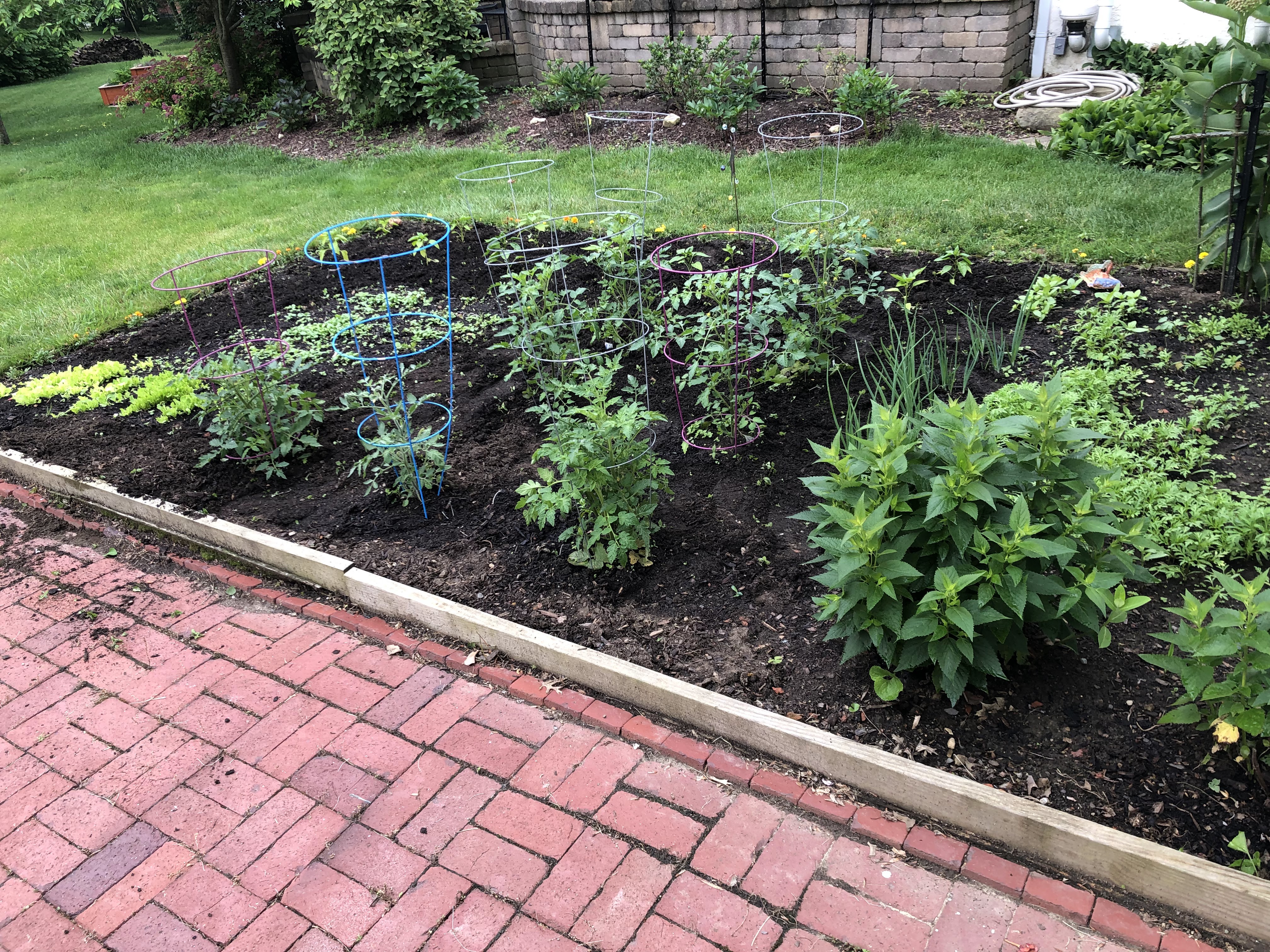
Warren has been working outside all weekend, rebuilding a trailer in which to haul his timpani. The balmy weather has made for great opportunity to paint pieces outside in the fresh air and not in the garage. As for me, I spent a couple of hours this morning spading up the kitchen garden, turning under the top layer. Next spring I'll dump a load of compost on it and till it all again before planting.

The above lines are from the poem Months by Sara Coleridge, an English poet who lived in the early nineteenth century and who is now largely forgotten. Largely forgotten except for this poem, which crops up in many anthologies of children's poems. Sara, who is often relegated to poetry rosters (when she appears at all) as a "minor" poet, was the daughter of Samuel Taylor Coleridge, who penned The Rime of the Ancient Mariner and Kubla Khan. Samuel, a founder of the Romantic movement in England, is still very much a "major" poet, even in our increasingly poetry-starved high school curricula.

I have read Rime more than once, avoid albatrosses at all costs, and in high school memorized portions of Kubla Khan. Yet I knew Sara's work long before I knew she had a more famous father. That pleases me. I like that, despite her small and faded fame, Sara's verses about the months continue to be read to and sometimes chanted by small children.

Dull November will come soon enough. For today, though, I am celebrating the warmth, the sun, and the poet's daughter who gave us the calendar in couplets.

Months by Sara Coleridge

January brings the snow,
Makes our feet and fingers glow

February brings the rain,
Thaws the frozen lake again

March brings breezes, loud and shrill,
To stir the dancing daffodil

April brings the primrose sweet,
Scatters daisies at our feet

May brings flocks of pretty lambs
Skipping by their fleecy dams.

June brings tulips, lilies, roses,
Fills the children's hands with posies.

Hot July brings cooling showers,
Apricots, and Gillyflowers.

August brings the sheaves of corn;
Then the harvest home is borne.

Warm September brings the fruit;
Sportsmen then begin to shoot.

Fresh October brings the pheasant;
Then to gather nuts is pleasant.

Dull November brings the blast;
Then the leaves are whirling fast.

Chill December brings the sleet,
Blazing fire, and Christmas treat.

Friday, November 6, 2009

Life in the Percussion Section

One of the jokes I make about my life is that when I married Warren, I married the Symphony. As Executive Director of a small regional symphony with a staff consisting of only himself, his duties range widely from administration to janitorial, with anything else in between those two extremes. Since Warren lives so much of his life with and for the Symphony, I live a lot of my life with and for the Symphony too.

What I have recently been reminded of is that not only am I married to the Symphony, but I also now live in the percussion section.

Warren is a percussionist. Until we became involved with one another, I had no idea what that truly meant.

I played in concert band all through school - first the flute and then the tuba, the latter being my true love instrumentally. There were always plenty of students - Warren among them - in the back of the band, playing the plethora of instruments that make up the percussion section.

In my naivety, I assumed that adult percussionists plied their trade just like high school percussionists. I figured when they played for an orchestra, all of the instruments were there on stage waiting for them. All they had to do was show up with some sticks or mallets and start playing.

My first intimation that this might not be so was when Warren offered to lend me some traps (what some of us novices might call "noisemakers") for a spelling bee. It turns out he owned lots of them. Lots of them? How about cases of them? Cowbells and ratchets and slide whistles and finger cymbals and gongs and gourds and slapsticks and things that I didn't even know were played, much less had a name.

As we saw more and more of each other, Warren started to talk about instruments that he had built or hoped to build or needed to rebuild - marimbas and xylophones and vibes and bass drum stands and tom toms. He would mention having to pull this or that instrument for a concert, and at the point that the instrument in question was a bass drum, I finally asked him just what all did he own? After Warren ran down a pretty extensive list, I asked what in retrospect was the end of my innocence about percussionists.

"Doesn't the orchestra own these things?"

No, as it turns out, the orchestra did not. In fact, most orchestras do not own many percussion instruments. Percussionists own most if not all of their own instruments. In fact, as Warren explained, not only do they own their instruments, but many of them make their own as well. (Have I ever mentioned the machine shop Warren has?)

He then looked at me. "Are you okay with this?"

I think Warren was afraid that once I learned just how much stuff - how many gongs and bells and drums and sticks and things that I didn't even know existed - he had, I would run away screaming and never come back.

He then added, "It's a lot of stuff."

It is a lot of stuff. And events of this week reminded me anew of just how much stuff a lot of stuff can be when you live in the percussion section.

Earlier this year, Warren replaced the door between the house and the garage with a custom made door that has a 38" opening. Why such a wide door? So he could get his timpani in the house. This Wednesday, with the help of Sam and Sam's friend Dylan, the timpani came home. They are in what used to be called the family room, along with a bass drum and a xylophone Warren just rebuilt. Oh, the two old timpani from another set are in the room too. I call it the percussion room.

The marimba is in the basement - the other percussion room - right now. Good thing because otherwise it would be really crowded in the room formerly known as the family room.

Warren practiced on his timpani last night for an upcoming performance next weekend. I was two rooms away, reading. He was concerned the sound would disturb me.

Not in the least. Timpani are sonorous instruments and the notes hang in the air long after the playing has stopped.

Next week we are heading to the Percussive Arts Society International Convention (PASIC), which will be in Indianapolis. A couple thousand percussionists from all over the world will descend upon the Hoosier State for four days of playing and talking and teaching and sharing. I don't understand 90% of what goes on at PASIC (I've attended before), but I am looking forward to it all the same.

After all, I live in the percussion section these days. I live with six timpani, two bass drums, a marimba, a xylophone, snare drums, tom toms, a drum set, congas, bongos, roto-toms, numerous cymbals, more gongs than I can count (from small to big), bells, chimes, tambourines, a whole bunch of traps, and enough steel, wood, resonators, and bars to make more xylophones and marimbas. Who knows? We may even bring more home from PASIC. Truth is, I'd love to have a spiral trash cymbal.

Back when Warren was pulling together traps for the spelling bee, he emailed me: "Doesn't everyone have a Chinese gong in their house? Seems perfectly normal to me."

After we decided to get married, I didn't get a ring. I got a small gong, hung on an oak stand that Warren had made.

Doesn't everyone get an engagement gong?

Seems perfectly normal to me.

Wednesday, November 4, 2009

Tiptoeing Through the Medical Bills

Today's mail held two medical bills, the continuing fallout from July's horrific oncology visit with Dr. Bully. After a long meditative moment spent pressing my forehead against a handily nearby doorframe, I picked up the phone to talk with two different billing reps and a financial assistance counselor at Ohio Health. In each case, the folks I dealt with today were far better listeners and far more pleasant than Dr. Bully had been back during our disastrous blind date.

For the record, Dr. Bully's arrogance and refusal to listen to the patient, i.e., me, cost me over $1000 after a hefty discount by the hospital. Had he listened, the bill would have been only a little over $400.

Another way of doing that math is had Dr. Bully not been so determined to shatter my self-confidence, I would have had enough presence of mind to cancel the unnecessary tests and my bills would have come out to only a little over $400. My shortcoming was falling apart when he bullied me throughout the entire appointment, thus costing myself over $1000.

I had coffee with a friend yesterday and we talked briefly about my situation - both my cancer and my lack of insurance. She said, both bluntly and warmly, "I can't imagine what you must go through to deal with cancer and the medical bills."

I appreciated her words tremendously, because often I can't imagine what I go through.

Money and medical care have been on my mind a lot lately. I don't like owing bills. I don't make lots of money either, so I have to pay them off in increments. Recently I have read in several different sources that America is the only industrialized nation where citizens routinely go bankrupt from their medical bills or die unnecessarily from not receiving medical treatment because they cannot afford it.

I've already done the former in recent years. I'm not looking forward to the latter. As it is, I have cut my oncology supervision to the bare bones minimum short of suspending it all together. On a day like today, when my mailbox is abloom with medical bills, I nonetheless wonder whether we can shave that supervision down even a little bit more.

I was supposed to see my oncologist in late October. I rescheduled that appointment to next week, but not because of concern over money. No, I am pleased to the point of smugness to report I rescheduled as a one-woman stand against the medical establishment.

The day before my late October appointment, I got a call confirming my appointment with…Dr. Bully. I almost dropped the phone. I thought I had heard wrong and so asked, "who?" "Dr. Bully." My regular oncologist would not be there and Dr. B. was again filling in for him.

Without even missing a beat, I said, "Oh, no, I won't see him. I refuse to see him. I had a terrible appointment with him and he makes me cry."

The poor woman on the other end of the line quietly said "Oh dear, I'm sorry. Would you like to reschedule?"

That was a no-brainer. I figured I could live with temporary uncertainty over my test results better than a bruised psyche.

Until today, I had shared this story with only four people. All four, starting with Warren, were heartily supportive of my decision. Margo emailed me: Good for you! Exactly the right thing, and I'm glad you didn't decide to straighten your shoulders and be a quote cooperative girl unquote. Many times the thing to do is to not be a cooperative girl.

I see my oncologist next Tuesday. I will be a quote cooperative girl unquote (thank you for that great phrase, Margo!) with Tim because I trust him. He knows my bone marrow, my pocketbook, and, most importantly, my character and my attitude. To top it off, he is an excellent listener. We will talk about my numbers, about what if any options we need to examine within my financial constraints, and about how long until I check in again with him. He will do so without threats, or badgering, or humiliation.

Having a thoughtful and compassionate doctor does not pay my medical bills. But it does allow me to come out of my appointment with my mind and my spirit intact, so that I may better spend my energy taking care of myself and my responsibilities.

I don't know where the national debate over health care will come out. I have stopped following it closely because it is too personal and too upsetting. Instead, I continue to do what so many of us out there do: stay as healthy as possible in as many ways as possible. I also regularly admonish my bone marrow to behave, although I have learned it doesn't take orders well.

And I continue to savor and celebrate each day and the myriad of small moments of great reward that fill my lap. As I finish typing these words, I can smell the homemade chili heating up on the stove. Sam is helping Warren move timpani in a little bit and may stay for supper. Afterwards, Warren and I will share our respective days and our thoughts and our love.

My lap is full to overflowing.

Saturday, October 31, 2009

Wrapping Up October

Yesterday was unseasonably warm for the next to last day of October. By mid-afternoon, the temperature was in the high 80s. Warren and I ate supper outside on the deck for what surely will be the last time of 2009, marveling at the t-shirt weather.

I have been getting into, through, and over a cold for the last two weeks, and still find myself tired and dragging by the evening. Last night was no exception. The unseasonable warmth held into the evening, so much so that it was cooler inside than outside. Mid-evening, with Warren's encouragement, I went back outside to the deck to "warm up."

What a revelation.

Our deck is on the east side of the house. The sky was heavily but not completely overcast, with the clouds moving at a good clip from south to north. The moon, almost but not quite full, was rising, tangling itself in the upper branches of the walnut tree. It was often obscured, but then, foreshadowed by the brightening torn edges of clouds, would startlingly reappear.

How long did I sit out there, watching the clouds scud past the moon? 10 minutes? 20 minutes? I don't know. I was lost in the light show. I had forgotten how brilliantly white the moon can be, how many ranges of colors there can be in the depths of the clouds.

Our yard was quiet, with only one or two laconic crickets chirping. But the cars and trucks on the highway a quarter mile away carried on the wind last night. A busy night, apparently. The wind was rising along with the moon, and I could hear a distant train whistle, probably from the tracks near my parents' house, on the edge of the wind's rushing.

How long has it been since I sat and…just sat? Apparently way too long because when I finally came inside, I felt centered and still.

Tonight is Beggar's Night and I am excited! For the last two years, we have always been out of town at a rehearsal. For two more years before that, I lived on a quiet side street which lacked sidewalks, so I saw no more than one or two trick-or-treaters. So this will be my first Halloween at home on a truly residential street in a long time.

I know what some of the children will be. Bobby and Meg, two doors down, will show up respectively as Harry Potter and a princess (Cinderella?). I know that because I was downtown yesterday afternoon, heard my name shouted, and saw them across the street with their dad, Meg waving furiously to make sure I saw her in all her glory. Katie and Nicholas, if they make it over this far from their house - three plus blocks being an enormous distance when you are very young - will be an unmatched set too. Nicholas is Batman tonight while Katie will be gliding around town dressed in a sari (her request). My friend Patricia's daughter Molly will be zooming by sometime as Tinkerbell.

I am looking forward to the faces and the costumes and the excitement. When my children were little, I was often the one who stayed and handed out candy, exclaiming as neighborhood children and school classmates trooped up the steps and held out their bags. The youngest ones would shout "Do you know me?," firmly believing that a swirl of glitter or pirate rags rendered them incognito. The teenagers would grin sheepishly, especially since I usually made them perform to get candy. ("Come on, you're 15 and out trick-or-treating? You gotta earn this candy!")

Those are my boys (no surprise) in the photo on a long-ago Halloween. Sam is 3+, Ben is in 2nd grade. Sam as a young child was terrified of people in costumes - from Mickey Mouse to monsters - and was none too comfortable wearing one himself. Halloween was a troubling holiday for him; he had to balance his fear of costumes against the lure of candy. You can tell from the way he is holding his hands that he was already troubled about the prospect.

Ben, on the other hand, loved dressing up. His first Halloween venture resulted in his saying, after the third house, "no thank you, I have enough candy," but wanting to continue going from door to door just for the fun of it. After Ben got the "as much candy as your sack will hold" part down, he often based his costume upon his favorite books. That's Gandalf the White there. For the record, I made the entire costume, including the hat, which was no small feat given my lack of sewing skills. It rained that Halloween; that ground length cloak swept up several gallons of water before a very soggy Gandalf returned home that night.

I get a special treat myself this ghostly holiday. Sam flies out of Portland late tonight and I pick him up at Port Columbus in the morning. He has already lined up an apartment, he starts looking for work this week, and my wandering boy is home again for…who knows? Welcome back, Sam.

Wednesday, October 28, 2009

Our Nights at the Movies

Warren's parents owned a movie camera and did a stunning job of documenting their home life from holidays to parades to visits from family to travels of their own. They left behind over 50 color reels before camcorders came along. The oldest date back to Art and Ellen's first apartment in Chicago when they were just newlyweds, before the move to Ohio, before the children.

Warren and I have started watching a few reels - not in any particular order - each night before heading to bed.

Warren has seen most of these before, although he has not watched them in decades. When he was younger, Ellen would routinely drag the children into the family room and make everyone watch home movies. As Warren and his siblings grew older and more insistent in their refusal, the home movie nights petered out.

Our homegrown Nights at the Movies have been a revelation for us both.

For Warren, it is a chance to see with adult eyes his childhood and youth. There is his grandfather Wilson, who died before Warren was two, walking alongside his daughter, Ellen, who is holding his infant grandson, Warren. There is grandmother Wilson, whose smile is even more infectious and inclusive on film than in photos. Here are Warren and his younger brother Brian, opening Christmas stockings and dancing with childish glee around their presents. There they are again, holding their new baby sister.

When Warren's grandmother Hyer appeared, holding a grandchild and smiling, Warren laughed and said "that is the only time you will ever see my grandmother smiling." A night later, when she appeared in other scene, still smiling, I looked at Warren and said "apparently your grandmother smiled a lot more than you remember."

For me, it is a chance to see Warren's past in both a fuller and more compressed way than looking at photos (which we have also done). Fuller because now I can see the smiles and the movement that give life to the still photos. More compressed because the scene hangs on the wall for a brief bit of time and then is gone, sometimes before it sinks in.

One of the reels we have watched included a few moments of Warren's high school graduation, which I remember in great detail because I was so enamored of him at the time. I gave a small gasp when Warren appeared immediately after graduation, talking to someone and smiling broadly.

I knew that boy. That boy, the one right there, is the one sitting beside me each night as we watch films.

Yes, I remembered that graduation well, but seeing even a glimpse of it again took me by surprise.

My favorite play is Our Town by Thornton Wilder. The entire last act has Emily, who has died in childbirth, reliving a day of her life. She has been warned by the other dead in the cemetery not to go back but chooses to relive her 12th birthday, exclaiming, "Oh, I want the whole day."

Emily struggles between her joy at experiencing life again and the pain of knowing how fast that life went and how much she took for granted. When Emily first sees her mother in the kitchen on this relived day, she can't help but say, "Oh! how young Mama looks! I didn't know Mama was ever that young." Moments before her father enters the kitchen, Emily breaks down and cries out, "I can't. I can't go on. It goes so fast. We don't have time to look at one another."

As I watch the home movies, I have some of that same bittersweet sense of time. Art and Ellen are so young, with their whole married life still before them. Warren is so young in his graduation gown. While the mind can accept that I am watching something from 30, 40, 50, 60 years ago, the heart lags behind. Like Emily, I want to say to these flickering shadows, "just look one minute as if you really saw one another."

Deep down, I think Wilder believed that most of us really did look, maybe not every minute, but enough that we knew the joy and beauty and gifts of our days. Our Town, to me, is a beautifully wrought reminder not to take those days for granted. As much as I want to have an Emily moment with the home movies, I suspect that the filmmakers, almost always Art and Ellen, had a sense of the swiftness of time. That may be why they filmed so much, to slow it down and hold onto it for a just a little bit longer.

There is a film sequence of Warren learning to walk. There are short clips of him standing holding onto furniture, of him walking with the sure aid of a parent's hands, of him walking holding his father's leg. Every few seconds of film, he is a little surer and a little closer to stepping off on his own. Then suddenly there is the little toddler taking stiff, jerky baby steps, but staying upright all the way across the yard.

Art is filming that last sequence; you can just see Ellen's outstretched hand beckoning her son towards her. When I saw it, I exclaimed, "Look! There you go!" Although I knew the scene was inevitable, I was excited all the same at seeing it. For that brief moment, watching that little boy walk was our relived day, was our moment in time captured so long ago by Ellen and Art.

Warren has repeatedly said Ellen would be delighted at our watching the movies that she loved so much.

I know she is.